
Exploring Resilience: Vulnerability, Social Security, Political Inclusion.
Promoting a Sustainable Transition based on Local Practices and Governance.

Small-scale and Artisanal Fisheries in Mediterranean region
Local communities are increasingly recognized as holders of knowledge and practices beneficial for ecological transition, yet they are often marginalized by neoliberal economies that favour individual competition and top-down, technocratic policies. The UN Declaration on the Rights of Peasants (UNDROP) affirms food sovereignty as the right of communities to determine their own food systems, combining sustainable development with local governance of land and resources. This project employs food sovereignty as a critical tool to analyse the conservation of local identities, the reduction of vulnerabilities, and the promotion of a culturally embedded sustainable transition.

Migrations: Rights, Labour, Culture
Migrant women are increasingly subjected to intersecting discriminations based on gender, class, ethnicity, and nationality, producing specific forms of vulnerability and dehumanising conditions. This project analyses migrant women employed in the agricultural and care sectors in the Mediterranean and sub-Saharan Africa not as passive victims, but as active agents whose corporeality embodies a wider struggle against contemporary (bio)capitalism. At the same time, the project examines how migrant communities generate transformative practices from below—creating new living environments, relational networks, and forms of interculturality that challenge neoliberal governance. By bringing together theoretical research and empirical observation, the project assesses how resilience practices can be reclaimed as tools for empowerment, radical transformation, and political inclusion.
Territories, risk mitigation policies and institutions
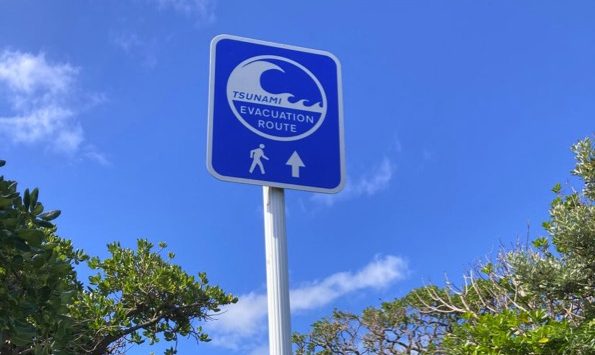
The resilience paradigm generates important reflections on the territorial effects of global emergencies, particularly how national and supranational regulatory measures impact local contexts. This global-local dialectic shapes new social and institutional behaviours, transforming experiences of security, mobility, and the relationship with territory. The project analyses how territorial actors respond to internal and external stimuli—including risk and emergency situations—through evolving configurations of security, redefining evolutionary perspectives and affecting territorialisation processes. By focusing on vulnerability as an analytical category, the research identifies resources and strategies for locally designed resilience interventions.

Università degli Studi di Palermo
The Palermo unit brings together a multidisciplinary team of political philosophers and researchers whose work spans critical theory, biopolitics, migration studies, gender studies, and ecological thought. Led by Principal Investigator Prof. Serena Marcenò, the unit includes Prof. Salvo Vaccaro, whose research focuses on anarchism, surveillance, and algorithmic governance; Prof. Viviana Segreto, whose work examines power, subjectivation, and nonviolence; Prof. Marco Di Donato, specialist in Middle Eastern politics and political participation; and Dr. Giulia Sajeva, whose work on biocultural rights and Earth jurisprudence explores the intersections of ecology, law, and politics. The unit’s research capacity is further strengthened by the contributions of postdoctoral researchers Dr. Germana Vinciguerra, whose research examines migrant women’s biolabour, intra-African migration, and feminist approaches to borders and mobility.

Università degli Studi di Salerno
The Salerno unit brings together a team of political philosophers whose research focuses on the intersections of norms, governance, subjectivity, and the politics of migration. Led by Prof. Antonio Tucci, whose work examines neoliberal governmentality, authoritarian liberalism, and biopolitical normativity, the unit includes Prof. Marianna Esposito, whose research explores migrant women’s experiences, borderlands, and the politics of bodies; Prof. Valeria Giordano, specialist in gender, vulnerability, and human trafficking; and Prof. Sandro Luce, whose work investigates the governance of technology, algorithmic power, and contemporary forms of accumulation. The unit’s research capacity is further strengthened by the contributions of postdoctoral researchers Dr. Carmelo Nigro, whose work examines spaces of exception, legal fiction, and neoliberal governmentality, and Dr. Francesco Raparelli, whose research focuses on the institutional assemblages of capitalism and the transformations of public and private spheres.

Università degli Studi di Bari – Aldo Moro
The Bari–Lecce unit brings together a team of political philosophers and social theorists whose research focuses on the intersections of territory, institutions, risk mitigation policies, and the transformations of contemporary governance. Led by Prof. Giuseppe Cascione, Full Professor of Political Philosophy at the University of Bari Aldo Moro, the unit includes Prof. Gianpasquale Preite, Associate Professor at the University of Salento, whose research examines deviance, vulnerability, and resilience in the governance of uncertainty; Prof. Angelo Chielli, Associate Professor at the University of Bari Aldo Moro, who contributes to the unit’s activities as critical mass; and Dr. Umberto Marzo, postdoctoral research fellow whose work explores algorithmic governance, technocratic rationality, and the paradoxes of resilience in international relations and climate governance.
Resilience project Results
Activities
Here you will find an overview of the scientific and public engagement activities carried out by the three research units throughout the project. From international conferences and thematic workshops to public seminars, winter and summer schools, and outreach events, this section documents the project’s commitment to fostering interdisciplinary dialogue, disseminating research results, and engaging with diverse audiences. Explore the initiatives that have shaped our collective reflection on resilience, migration, territory, and the politics of crisis.
Publications
This section collects the scientific outputs produced by the project over its duration. Here you will find peer-reviewed articles, edited volumes, book chapters, and thematic special issues that reflect the project’s critical engagement with the concept of resilience, migration, gender, territory, and contemporary governance. The publications span multiple languages and academic traditions, showcasing the project’s commitment to interdisciplinary research, international collaboration, and Open Access dissemination where possible.
Public engagement
The project has actively engaged with civil society, cultural associations, schools, and local communities, bringing critical perspectives on resilience, migration, and political transformation beyond the academic sphere. This section documents public lectures, book presentations, dialogues with activists, and community events that have fostered dialogue between research and society. These initiatives reflect the project’s commitment to making philosophical and political inquiry accessible, relevant, and responsive to the pressing challenges of our time.

Our Approach
The project adopts a multifaceted methodology structured around four interchangeable approaches, guided by a double track that integrates theoretical reflection with empirical research.
Critical Theories Approach – We deconstruct the concept of resilience, tracing its genealogy and exposing its function within neoliberal governance. By critically analysing key texts, authors, and policy documents, we uncover how resilience can perpetuate—rather than reduce—the exclusion of vulnerable individuals and communities.
Capacity Development Approach – We examine the local effects of global resilience policies, drawing on UNDP frameworks to understand how societies can transform from within. By enhancing existing capacities in local communities, we support sustainable development and democratic participation.
Territory-Based Approach – Through comparative empirical research on concrete experiences and active subjectivities, we analyse how resilience manifests in specific contexts. We identify the peculiarities of local communities, their acts of resilience, and the forms of differential inclusion in transition and recovery policies.
Praxeological Approach – We maintain continuous feedback between theoretical analysis and the observation of concrete practices—from local communities and institutions to social movements and grassroots initiatives. This iterative process ensures that our research remains responsive to the real needs of territories and communities.
Frequently Asked Questions
Cras ultricies ligula sed magna dictum porta?
Vestibulum ac diam sit amet quam vehicula elementum sed sit amet dui. Vestibulum ante ipsum primis in faucibus orci luctus et ultrices posuere cubilia Curae; Donec velit neq
Nulla porttitor accumsan tincidunt.?
Vestibulum ac diam sit amet quam vehicula elementum sed sit amet dui. Vestibulum ante ipsum primis in faucibus orci luctus et ultrices posuere cubilia Curae; Donec velit neq
Praesent sapien massa, convallis a pellentesque?
Vestibulum ac diam sit amet quam vehicula elementum sed sit amet dui. Vestibulum ante ipsum primis in faucibus orci luctus et ultrices posuere cubilia Curae; Donec velit neq
Nulla quis lorem ut libero malesuada feugiat?
Vestibulum ac diam sit amet quam vehicula elementum sed sit amet dui. Vestibulum ante ipsum primis in faucibus orci luctus et ultrices posuere cubilia Curae; Donec velit neq
Curabitur aliquet quam id dui posuere blandit?
Vestibulum ac diam sit amet quam vehicula elementum sed sit amet dui. Vestibulum ante ipsum primis in faucibus orci luctus et ultrices posuere cubilia Curae; Donec velit neq
Pellentesque in ipsum id orci porta dapibus?
Vestibulum ac diam sit amet quam vehicula elementum sed sit amet dui. Vestibulum ante ipsum primis in faucibus orci luctus et ultrices posuere cubilia Curae; Donec velit neq